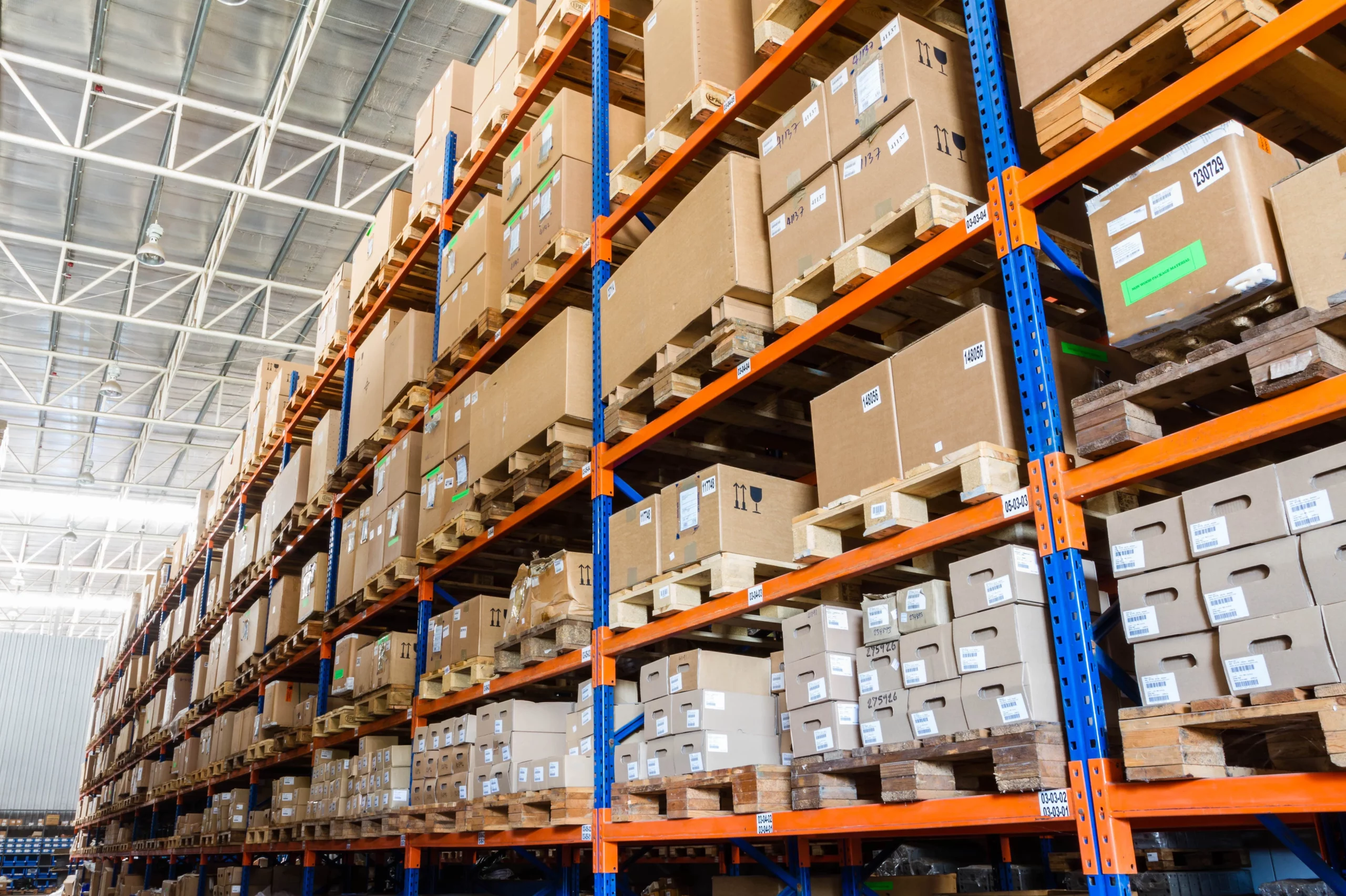
Drive-in and drive-through racking systems offer a major advantage in warehouse storage by eliminating aisles and condensing pallet positions. These high-density systems can improve space utilization by up to 75% compared to selective racking. However, without proper management, they can create bottlenecks that slow retrieval times, increase forklift congestion, and reduce overall productivity.
Unlike selective racking, where every pallet position is directly accessible, drive-in and drive-through racks require forklifts to enter deep storage lanes, often extending six or more pallets deep. This design is ideal for Last-In, First-Out (LIFO) storage and bulk inventory, but it also leads to longer retrieval times and a higher risk of racking damage. To maintain efficiency, warehouse managers must implement strategic optimization—rethinking traffic flow, enhancing operator training, and investing in protective equipment.
Congestion and inefficiency in deep-lane storage systems don’t just slow operations—they also increase costs and safety risks. According to the Occupational Safety and Health Administration (OSHA), nearly 90,000 forklift-related accidents occur in U.S. warehouses each year, with many caused by collisions with racking. In deep-lane systems, where forklifts must drive directly into storage lanes, the risk of impact rises significantly, leading to costly repairs and potential injuries.
Beyond safety concerns, inefficient traffic flow can cut warehouse productivity by as much as 20%, according to the Warehousing Education and Research Council (WERC). With increasing logistics demands, warehouses can’t afford unnecessary slowdowns. Implementing structured traffic flow strategies and operator training programs is essential to keeping operations running smoothly.
One of the most effective ways to reduce congestion in deep-lane storage is by establishing clear entry and exit points for each lane. Designating specific forklift paths prevents unnecessary backtracking and delays. In high-traffic areas, implementing one-way travel routes—similar to city street patterns—can further streamline movement, preventing forklifts from crossing paths in tight spaces.
For warehouses with high turnover, staggered picking schedules can help avoid multiple forklifts accessing the same lanes at once. Studies from the Material Handling Institute (MHI) show that well-coordinated traffic flow strategies can reduce retrieval times by up to 30%, allowing for faster order fulfillment and lower labor costs.
Even with the best traffic strategies, a warehouse is only as efficient as its forklift operators. Deep-lane racking requires precision handling, and operators must be trained not just in basic forklift operation but in techniques specific to entering, navigating, and exiting deep storage lanes.
Research from the National Institute for Occupational Safety and Health (NIOSH) found that experienced operators who receive specialized training for deep-lane systems can improve loading and retrieval times by 15–25%. These improvements come from reducing minor but time-consuming errors, such as misalignment of pallets or excessive maneuvering.
To further enhance efficiency, training should emphasize proper pallet placement, ensuring inventory is stored for maximum space utilization while remaining accessible. Forklift simulation technology has also become a valuable training tool, allowing operators to practice deep-lane navigation without the risk of real-world damage.
While skilled operators and optimized traffic flow are essential, the physical infrastructure of a warehouse also plays a major role in preventing bottlenecks. Investing in the right equipment can reduce damage, streamline pallet handling, and improve overall throughput.
Got Rack offers a range of products designed to enhance efficiency in deep-lane storage systems. End-of-row guards and post protectors help prevent racking damage from forklift impacts, reducing repair costs and improving safety. Fork entry bars lift flat stock above beam level for easier forklift access, while double-flanged cross bars evenly distribute pallet weight, ensuring better load security. Row Spacers help maintain consistent spacing between racks, reinforcing overall system stability.
By incorporating these solutions, warehouses can minimize disruptions, extend the lifespan of their racking systems, and keep operations running at peak performance.
Drive-in and drive-through racking systems offer unmatched space efficiency, but they require careful management to avoid operational slowdowns. With optimized traffic flow, specialized forklift training, and the right protective equipment, warehouses can maximize throughput while maintaining safety and efficiency.
As logistics demands continue to grow, fine-tuning deep-lane storage systems will be a crucial factor in staying competitive. By proactively addressing bottlenecks, warehouses can turn these high-capacity storage solutions into high-performance assets.
Looking to improve your warehouse efficiency? Got Rack has the expertise and equipment to help you get the most out of your storage system. Contact us today to optimize your racking strategy.