When businesses think about warehouse inefficiencies, they often focus on visible problems—damaged racks, outdated equipment, or lack of automation. However, some of the most significant cost drains are hidden inefficiencies within warehouse flow patterns. According to a study by the Material Handling Institute, inefficient warehouse design can reduce productivity by as much as 30%, leading to millions in lost revenue annually. Identifying and addressing these inefficiencies can dramatically reduce labor costs, increase throughput, and enhance overall productivity.
Warehouse inefficiencies don’t just slow things down—they can cost you thousands in wasted labor, product damage, and lost productivity. The Bureau of Labor Statistics reports that warehouse inefficiencies contribute to an estimated $500 billion in annual losses for U.S. businesses. Some common indicators of inefficient flow include:
- Congested aisles that lead to delays in retrieving and storing products.
- Inefficient picking routes that cause unnecessary travel time for workers.
- Frequent traffic conflicts between forklifts, pallet jacks, and foot traffic.
- Dead space that could be better utilized for storage or staging areas.
- Misplaced or hard-to-access inventory that slows down fulfillment times.
One of the most significant contributors to warehouse inefficiencies is poor aisle configuration. Narrow aisles can cause congestion, making it difficult for workers and equipment to move efficiently, while overly wide aisles can waste valuable storage space. Optimizing aisle width can lead to a 25% increase in storage capacity while also improving traffic flow, according to a study by the Warehousing Education and Research Council. Carefully planning aisle spacing based on warehouse activity can create a more streamlined operation, ultimately improving both efficiency and safety.
Choosing the right racking system is another crucial factor in optimizing warehouse efficiency. A poorly designed racking system can force unnecessary movements and reduce picking efficiency. For instance, drive-in racking is ideal for high-density storage in areas with limited SKU variety, reducing the need for excessive aisles. Alternatively, push-back racking enhances accessibility and minimizes travel time for picking. Studies show that well-planned storage solutions can increase order fulfillment speeds by 15%, providing a competitive advantage in fast-paced industries.
If your warehouse is struggling with congestion on the main floor, valuable overhead space may be underutilized. Mezzanines offer an effective solution by creating additional storage or workspace, improving organization, and reducing floor-level traffic. Businesses that incorporate mezzanine systems report up to a 40% increase in usable space without the need for costly expansions. This added space allows for better workflow management, keeping operations running smoothly.
Traffic conflicts between forklifts and pedestrian workers can be a major cause of slowdowns and safety concerns. OSHA reports that nearly 100,000 forklift-related accidents occur annually in the U.S., many of which stem from poor warehouse flow. Implementing clear safety measures—such as end-of-row-guards, pedestrian barriers, and designated lanes for forklifts—can significantly improve movement within the facility. Proper signage and separation of pedestrian walkways from equipment zones ensure a safer and more efficient working environment.
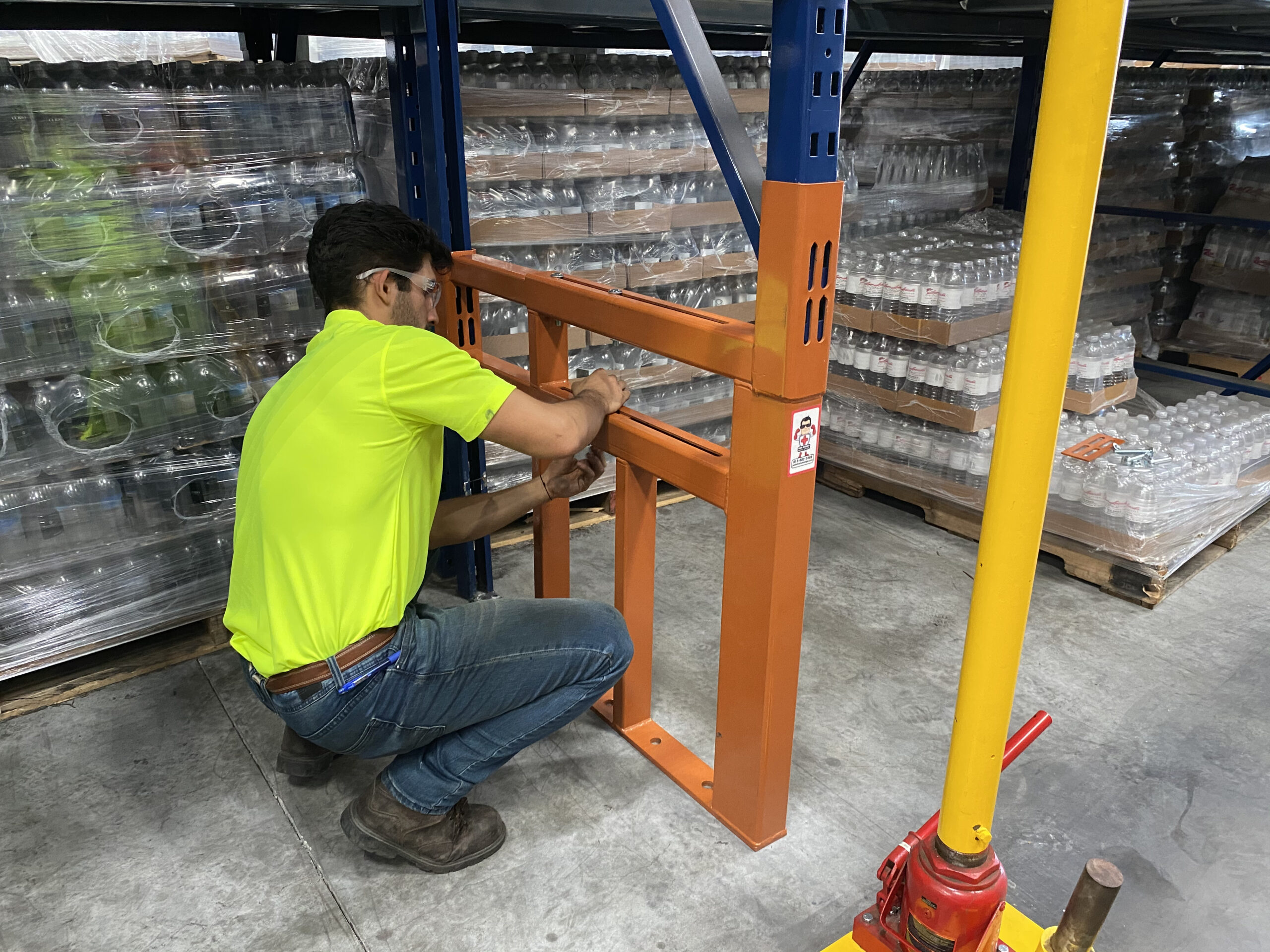
Shipping and receiving areas often present some of the most chaotic conditions in a warehouse. Poorly designed loading zones can lead to long truck dwell times and inefficiencies in staging materials. Optimizing these areas with well-planned staging solutions—such as cantilever racking for organizing materials and modular pallet rack repair kits to prevent rack damage—can reduce delays and streamline operations. Ensuring these areas are properly structured helps to keep goods moving smoothly through the warehouse, minimizing costly disruptions.
Many warehouses unknowingly waste time and money due to hidden inefficiencies in their layout and storage configurations. Research indicates that reconfiguring a warehouse layout can result in cost savings of up to 20%, reducing waste and increasing efficiency. By taking a proactive approach to assessing your warehouse flow and investing in the right racking solutions, businesses can unlock significant cost savings, improve fulfillment speed, and enhance overall workplace safety. The key is to continuously evaluate and refine warehouse operations to maintain optimal efficiency and productivity.
Got Rack has been helping businesses optimize their warehouse operations for over 30 years. Whether you need expert guidance on racking solutions, mezzanines, or warehouse layout optimization, our team is ready to assist. Contact Got Rack today to find out how we can help maximize your warehouse efficiency and improve your bottom line!